I've migrated the blog to wordpress. Eventually I'll redirect to that page but for now, this site will remain static.
http://scienceprose.wordpress.com
Monday, September 2, 2013

Tuesday, May 28, 2013
My Digital Life
About 2 years ago, it started officially happening. My paper trail was dissolving. I had relied on a paper calendar for years. I don't remember how it happened now, but I realized I needed the ability to schedule myself from any browser, and make repeated appointments. Google calendar is now an essential tab in my life.
My to-do list also was shredded. I have casual jots in Simplenote, as well as long lists (what to bring for LA), and life goals. If I want to remember something while I'm reading it, screenshot. If I want to remember something while I'm looking at it, snap a photo.
With Gmail's Priority Inbox, and the iPhone's improved search functionality, I keep only a few emails in my inbox, with the action items of the day starred. For better or worse, personal and work email goes to the same place.
I haven't been able to go completely digital, though. While a lot of my work involves data analysis and writing, a large part of it is still jotting notes, making sketches, and writing out equations longhand. My official work to do list is still a few sheets of paper on my desk, and I have a lab notebook. Of course, anything final gets a digital version, but it is an issue I can't overcome. Also, my raw data files are so large that I can't have my project folders on the cloud (yet?). So data has to stay local.
At one point a long time ago, I tried to use the app Papers to keep track of literature. This has mostly failed. The papers for which I have digital copies are random and in random folders. I still print most things I want to read. I haven't figured this out, though in principle it seems easy. Maybe it's because I like to highlight and take notes. Maybe it's because I feel like I'm too far behind. Maybe the organizational scheme seems daunting.
As far as other files, Dropbox has proven indispensable. Almost all of my personal and work-ish (basically anything that's not experimental data and analysis files) I have instant access to. Google Drive seems to have improved recently; I need to figure out whether to use this more regularly. I definitely need to organize the files there at some point...right now it's a dump of files that were mostly shared with me.
Unfortunately with Dropbox, I don't have enough space to store my music collection. I don't know why I would really need this all the time, but I think it would be comforting to have a copy everywhere. The computer my phone/ipod syncs to stays at home. I carry a Macbook Air with me, which is great, but doesn't have near enough storage.
I was an early adopter of Amazon and Amazon Prime. But I was not using it efficiently. My Amazon cart had served as some sort of dumping ground for desires, half-desires, and things I was intrigued by.
I've reorganized. My Amazon cart is reserved for music only. Books I might want to read are sampled on my Kindle. Pinterest serves as the new file system for half-desires, major purchases, pantry items, and curios.
A podcasting app keeps me automatically up-to-date for my commute.
I have several websites for journaling purposes, though get more and more grossed out by the Blogger layout whenever I come from a Wordpress site.
Speaking of websites, I have used Reader for about a year now, and now don't know what to do when it expires in July! TBD. I never ever got into bookmarks, probably because I always spent so much time hopping from computer to computer. But with Reader and the links on my website, I have managed to patch them together. If something is worth caring about but not worth "bookmarking," I can often find another digital home for it, even if it's just a pdf saved to my Dropbox. Occasionally I might (shhhh) print something out.
I still haven't found the time to organize my photos, but at least now I try to put albums on Facebook with some regularity. I'm one of the rare ones who wants my mom to join FB, so I don't have to go through some convoluted sharing process.
I also now have what might generously be called a Twitter presence, too. For me FB is personal, and Twitter is for following people and getting some people to read my stuff. The occasional joke. I don't know if I can deal with Twitter being the new norm, since that's what the kids are doing. And I like having separate Twitter and FB spheres. I really am hooked to the visual nature of FB. I don't necessarily see the point of Instagram. Maybe I will someday/I am an old. I sorta get the point of Tumblr but can't be bothered yet.
I've also signed up for Mint, and it's nice it automatically tracks things. But I can't say I use the tools. Every once in awhile I just look at it. Maybe a worthy next digital goal?
Oh, and ladies, if nothing else, get a period tracker app. I'm pretty sure this is why smartphones exist.
My to-do list also was shredded. I have casual jots in Simplenote, as well as long lists (what to bring for LA), and life goals. If I want to remember something while I'm reading it, screenshot. If I want to remember something while I'm looking at it, snap a photo.
With Gmail's Priority Inbox, and the iPhone's improved search functionality, I keep only a few emails in my inbox, with the action items of the day starred. For better or worse, personal and work email goes to the same place.
I haven't been able to go completely digital, though. While a lot of my work involves data analysis and writing, a large part of it is still jotting notes, making sketches, and writing out equations longhand. My official work to do list is still a few sheets of paper on my desk, and I have a lab notebook. Of course, anything final gets a digital version, but it is an issue I can't overcome. Also, my raw data files are so large that I can't have my project folders on the cloud (yet?). So data has to stay local.
At one point a long time ago, I tried to use the app Papers to keep track of literature. This has mostly failed. The papers for which I have digital copies are random and in random folders. I still print most things I want to read. I haven't figured this out, though in principle it seems easy. Maybe it's because I like to highlight and take notes. Maybe it's because I feel like I'm too far behind. Maybe the organizational scheme seems daunting.
As far as other files, Dropbox has proven indispensable. Almost all of my personal and work-ish (basically anything that's not experimental data and analysis files) I have instant access to. Google Drive seems to have improved recently; I need to figure out whether to use this more regularly. I definitely need to organize the files there at some point...right now it's a dump of files that were mostly shared with me.
Unfortunately with Dropbox, I don't have enough space to store my music collection. I don't know why I would really need this all the time, but I think it would be comforting to have a copy everywhere. The computer my phone/ipod syncs to stays at home. I carry a Macbook Air with me, which is great, but doesn't have near enough storage.
I was an early adopter of Amazon and Amazon Prime. But I was not using it efficiently. My Amazon cart had served as some sort of dumping ground for desires, half-desires, and things I was intrigued by.
I've reorganized. My Amazon cart is reserved for music only. Books I might want to read are sampled on my Kindle. Pinterest serves as the new file system for half-desires, major purchases, pantry items, and curios.
A podcasting app keeps me automatically up-to-date for my commute.
I have several websites for journaling purposes, though get more and more grossed out by the Blogger layout whenever I come from a Wordpress site.
Speaking of websites, I have used Reader for about a year now, and now don't know what to do when it expires in July! TBD. I never ever got into bookmarks, probably because I always spent so much time hopping from computer to computer. But with Reader and the links on my website, I have managed to patch them together. If something is worth caring about but not worth "bookmarking," I can often find another digital home for it, even if it's just a pdf saved to my Dropbox. Occasionally I might (shhhh) print something out.
I still haven't found the time to organize my photos, but at least now I try to put albums on Facebook with some regularity. I'm one of the rare ones who wants my mom to join FB, so I don't have to go through some convoluted sharing process.
I also now have what might generously be called a Twitter presence, too. For me FB is personal, and Twitter is for following people and getting some people to read my stuff. The occasional joke. I don't know if I can deal with Twitter being the new norm, since that's what the kids are doing. And I like having separate Twitter and FB spheres. I really am hooked to the visual nature of FB. I don't necessarily see the point of Instagram. Maybe I will someday/I am an old. I sorta get the point of Tumblr but can't be bothered yet.
I've also signed up for Mint, and it's nice it automatically tracks things. But I can't say I use the tools. Every once in awhile I just look at it. Maybe a worthy next digital goal?
Oh, and ladies, if nothing else, get a period tracker app. I'm pretty sure this is why smartphones exist.
Online Presence
For those keeping track at home, I am maintaining or contributing to several sites now.
http://physicslessonplans.wordpress.com/
A new site that is starting out with material developed by my students this Spring. I envision it as a space where people can share their lesson plans or demonstration ideas for physics concepts. Most of the content currently is aimed at elementary school students, but it's all fair game. The only rule: it must involve demonstration and discussion.
http://figureoneblog.wordpress.com/
A site to which I am contributing regularly. I'm attempting to have polished pieces posted there.
http://kerstinnordstrom.com/
My online CV.
This blog
Will still be a place where I write my ideas or rough pieces. I'll also sometimes link to my work elsewhere for archival purposes. I hope to start using it more often for personal stuff (aka travel journal).
http://physicslessonplans.wordpress.com/
A new site that is starting out with material developed by my students this Spring. I envision it as a space where people can share their lesson plans or demonstration ideas for physics concepts. Most of the content currently is aimed at elementary school students, but it's all fair game. The only rule: it must involve demonstration and discussion.
http://figureoneblog.wordpress.com/
A site to which I am contributing regularly. I'm attempting to have polished pieces posted there.
http://kerstinnordstrom.com/
My online CV.
This blog
Will still be a place where I write my ideas or rough pieces. I'll also sometimes link to my work elsewhere for archival purposes. I hope to start using it more often for personal stuff (aka travel journal).
Wednesday, April 3, 2013
Monday, April 1, 2013
Fair and balanced
Aw, shucks! :)
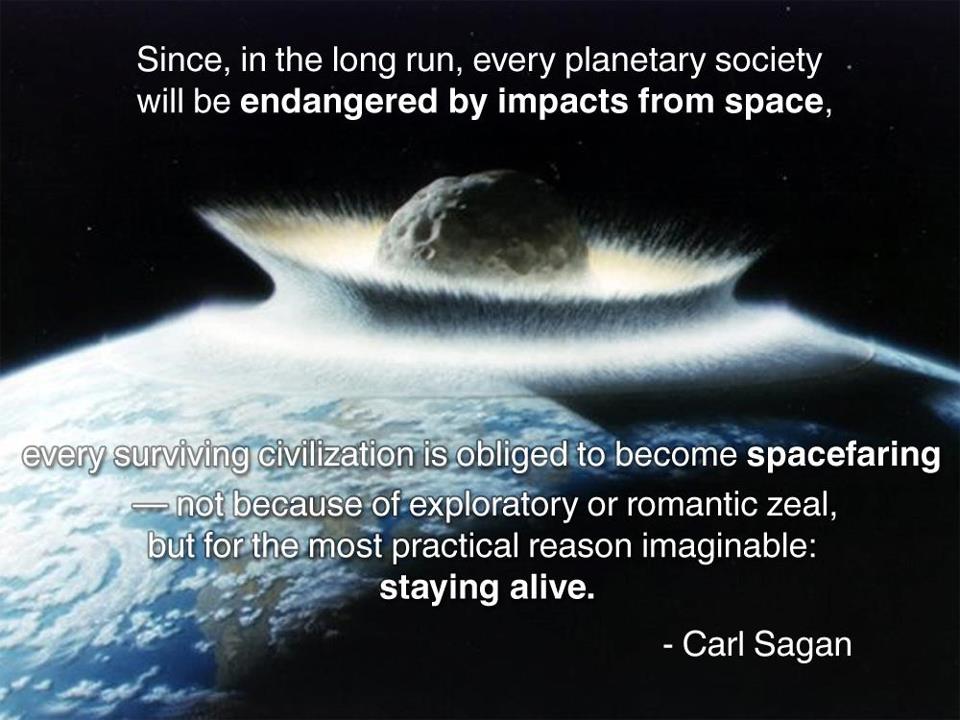
"Nordstrom’s article clearly and accurately described the scientific context for the sea-level debate. But her story was a rarity in a sea of “balanced” stories about the controversy."
http://www.yaleclimatemediaforum.org/2012/07/false-balance-in-some-coverage-of-carolina-sea-level-controversy/
Friday, January 11, 2013
My Day Job
Wednesday, December 5, 2012
Sports, a new arena for scaling
A recent paper in the open access New Journal of Physics, might help you outsmart your bookie. At least if your bookie covers tennis.
In this country, we like to think of all men being equal. But when it comes to things we can measure, like height, we know all men are not equal. If you make a histogram of heights for men, you get the famous "bell curve." There exists some average height that corresponds to the peak of the curve, in the neighborhood of 6 feet. Most men are a bit shorter or taller than average, but even extreme heights are still within 2 feet of average. It's exceedingly unlikely to find someone 10 feet tall. So, by this measure, all men are equal-ish.
But all men are not equal in wealth. The Pareto principle, worth another post in itself, says that 20 percent of the people have 80 percent of the wealth. Further, with wealth, there is no upper bound on income. As a result, the histogram of wealth looks vastly different from the histogram of height. It is a "power law" distribution. There is no average amount of wealth. It is also called a scale-free distribution: if you zoom in on any area of the graph, it will look exactly the same. And extreme wealth, unlike 10 feet tall men, becomes a real possibility.
In the article mentioned above, the authors extend the wealth analogy to sports. It's a natural fit here: individuals are not equal, they have rank. Anyone who watches or plays sports knows there is no average. One can be an Olympic-level sprinter, but every so often a Usain Bolt will come around to humble you. The authors of the article look at the distribution of ranks (or prizemoney, where appropriate) for different sports and indeed find a power law relationship. (There is an exponential tail, but that is a mathematical detail to be discussed among the truly interested.)
Actually, the running analogy is a little off, because presumably there is some biological limit to sprinting speed, though apparently we aren't there yet.
Switching focus, tennis is a good example of a sport where we don't seem to be up against any biological limits, and there is no upper limit on skill, the crucial piece of the game. All pro players are good, but Serena Williams or Rafael Nadal will crush most of them.
In the paper, the authors further go down the rabbit hole with tennis, as it is a sport with an extremely detailed record of head-to-head meetings. Based on the previous analysis of the rank distributions, they are able to come up with an equation (that fits the data) predicting the likelihood of a win. Based solely on the difference in rank of two players, they know the exact odds.
Call your bookie.
In this country, we like to think of all men being equal. But when it comes to things we can measure, like height, we know all men are not equal. If you make a histogram of heights for men, you get the famous "bell curve." There exists some average height that corresponds to the peak of the curve, in the neighborhood of 6 feet. Most men are a bit shorter or taller than average, but even extreme heights are still within 2 feet of average. It's exceedingly unlikely to find someone 10 feet tall. So, by this measure, all men are equal-ish.
But all men are not equal in wealth. The Pareto principle, worth another post in itself, says that 20 percent of the people have 80 percent of the wealth. Further, with wealth, there is no upper bound on income. As a result, the histogram of wealth looks vastly different from the histogram of height. It is a "power law" distribution. There is no average amount of wealth. It is also called a scale-free distribution: if you zoom in on any area of the graph, it will look exactly the same. And extreme wealth, unlike 10 feet tall men, becomes a real possibility.
In the article mentioned above, the authors extend the wealth analogy to sports. It's a natural fit here: individuals are not equal, they have rank. Anyone who watches or plays sports knows there is no average. One can be an Olympic-level sprinter, but every so often a Usain Bolt will come around to humble you. The authors of the article look at the distribution of ranks (or prizemoney, where appropriate) for different sports and indeed find a power law relationship. (There is an exponential tail, but that is a mathematical detail to be discussed among the truly interested.)
Actually, the running analogy is a little off, because presumably there is some biological limit to sprinting speed, though apparently we aren't there yet.
Switching focus, tennis is a good example of a sport where we don't seem to be up against any biological limits, and there is no upper limit on skill, the crucial piece of the game. All pro players are good, but Serena Williams or Rafael Nadal will crush most of them.
In the paper, the authors further go down the rabbit hole with tennis, as it is a sport with an extremely detailed record of head-to-head meetings. Based on the previous analysis of the rank distributions, they are able to come up with an equation (that fits the data) predicting the likelihood of a win. Based solely on the difference in rank of two players, they know the exact odds.
Call your bookie.
Monday, December 3, 2012
2 kinds of mole rats, 2 different cancer-fighting techniques
Did you know there are two (at least) kinds of mole rats? I didn't until recently. Here they are:

Blind mole rat
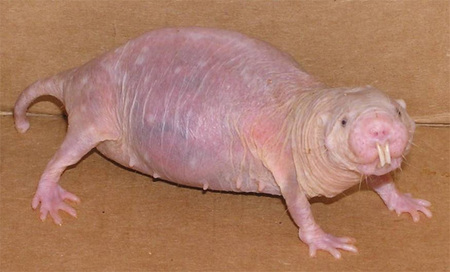
Naked mole rat
Beautiful creatures, aren't they?
Well, they're fascinating anyway. Naked mole rats have been shown to be cancer-resistant. Their cells are programmed to cease division when they sense they are getting too crowded. So any cancerous cells that develop will eventually crowd themselves out of dividing any further, "contact inhibition," as the shop talk goes. Basically, the cancer cells keep quiet about their identity, and do no harm.
Recently, in a paper by a team at the University of Rochester, blind mole rats are shown to also have cancer-fighting properties. However, it seems their potential cancer cells take a different tack. When they sense they have divided more than a normal amount of times, they kill themselves with their form of a cyanide capsule: a protein, IFN-beta. Rather than risk wreaking havoc on their sister cells, they take themselves out of the picture.
It's exciting to think that perhaps these discoveries will help us unleash hidden knowledge our own cells have. Or to simply help develop a novel drug.
Of course, it's absurd to think the cells have "free will" as I have analogized. Nonetheless, I couldn't help thinking about Battlestar Galactica when thinking about cells discovering they were something else. By the way, if you haven't seen it, don't wait around, just do it.
Friday, November 30, 2012
Effect of Good Teachers
This NYTimes article alerts us to work done on the efficacy of good teachers. The conclusion: good teachers are good. The article mentions "poor performing" teachers and the some comments debate about what do do about them, now that there is proof that good teachers are good.
A couple of thoughts. First, the effect is quite modest for an individual student, an increase of about $4600 in LIFETIME income. To me, the modesty of the gain underscores the notion that one teacher is just one variable in a sea of about 1000 variables, including socioeconomic status, family situation, race, peers, administrators, etc. But cumulatively, over a teacher's career, this results in about 2.5 million in increased earnings.
Maybe "good" teachers should get this figure as bonus on retirement. Not kidding, but wouldn't it be peachy?
Of course the question remains, how to weed out the bad apples. This seems the exact opposite tack to take. Our best and brightest (and medium best and medium brightest) are choosing "professional" careers. Teaching, in this country, has not garnered the respect of a profession, because it is historically low-paying. [Actually, most jobs once (or currently) dominated by women are underpaid, and that's another article I'll get to some day.]
Can we please just raise teachers' salaries and attract the good ones, rather than focusing on weeding out the bad ones?
A couple of thoughts. First, the effect is quite modest for an individual student, an increase of about $4600 in LIFETIME income. To me, the modesty of the gain underscores the notion that one teacher is just one variable in a sea of about 1000 variables, including socioeconomic status, family situation, race, peers, administrators, etc. But cumulatively, over a teacher's career, this results in about 2.5 million in increased earnings.
Maybe "good" teachers should get this figure as bonus on retirement. Not kidding, but wouldn't it be peachy?
Of course the question remains, how to weed out the bad apples. This seems the exact opposite tack to take. Our best and brightest (and medium best and medium brightest) are choosing "professional" careers. Teaching, in this country, has not garnered the respect of a profession, because it is historically low-paying. [Actually, most jobs once (or currently) dominated by women are underpaid, and that's another article I'll get to some day.]
Can we please just raise teachers' salaries and attract the good ones, rather than focusing on weeding out the bad ones?
Film Consulting
I'm sure they do good work, can we please have more of this stuff?
http://www.hollywoodmath.com/index.htm
How hard would it be for almost every film to have a bona-fide science consultant? Even "low-budget" films have a pretty high sticker price. Not that they should be underpaid, but I'm sure a fair number of scientists would be willing to help out for far less than their market value as a consultant (a different sort of mini-sabbatical, for sure!). Bottom line, having a science consultant shouldn't affect the budget too much - why wouldn't you?
And for your extremely high budget pictures, don't skimp and just get one consultant. You don't skip on cameramen or costume designers. Far too many good movies, even movies with a heaping serving of science, are riddled with errors.
http://www.hollywoodmath.com/index.htm
How hard would it be for almost every film to have a bona-fide science consultant? Even "low-budget" films have a pretty high sticker price. Not that they should be underpaid, but I'm sure a fair number of scientists would be willing to help out for far less than their market value as a consultant (a different sort of mini-sabbatical, for sure!). Bottom line, having a science consultant shouldn't affect the budget too much - why wouldn't you?
And for your extremely high budget pictures, don't skimp and just get one consultant. You don't skip on cameramen or costume designers. Far too many good movies, even movies with a heaping serving of science, are riddled with errors.
Protein Folding
I'm currently in the process of going through a monstrous stack of periodicals I've accumulated, including the magazine Physics Today, which comes with my APS membership.
This article by Ashley Smart is simply a research summary on experiments on proteins.
But Smart evoked a lot of thoughts about proteins. We need them to be folded correctly to work, but how are they folded? How is this the minimum energy state.
Smart's description of various denatured (unfolded) proteins reminded me a lot of the language used in the glass/jamming community. A fried egg consists of proteins denatured by heat. A similar transition happens for
"glassy" systems: raise the temperature and the material will flow.
Mechanical stress can cause also cause the protein in egg white to denature, resulting in a foamy, stiff, meringue. In jammed systems, like mayonnaise, mechanical stress (i.e. using a butter knife) causes the material to unjam (i.e. deform and spread on the sandwich).
The third variable discussed in the jamming community is volume fraction, which I won't delve into here. The third variable for the egg example is acidity, mixing egg whites with lime juice will also cause the proteins to denature. Completely different, can't win 'em all.
What also drew me into this simple piece was the description of the experiments. (Smart does a commendable job of trying to explain the math in words.) There are two processes that contribute to the overall signal the researchers measure, only one of which relates to protein folding. But if you change the temperature, each process responds on a vastly different timescale.Taking measurements at the right frequency and using a trick of derivatives, they can isolate the process of interest. An experiment like this would be a great lab in a biophysics class.
This article by Ashley Smart is simply a research summary on experiments on proteins.
But Smart evoked a lot of thoughts about proteins. We need them to be folded correctly to work, but how are they folded? How is this the minimum energy state.
Smart's description of various denatured (unfolded) proteins reminded me a lot of the language used in the glass/jamming community. A fried egg consists of proteins denatured by heat. A similar transition happens for
"glassy" systems: raise the temperature and the material will flow.
Mechanical stress can cause also cause the protein in egg white to denature, resulting in a foamy, stiff, meringue. In jammed systems, like mayonnaise, mechanical stress (i.e. using a butter knife) causes the material to unjam (i.e. deform and spread on the sandwich).
The third variable discussed in the jamming community is volume fraction, which I won't delve into here. The third variable for the egg example is acidity, mixing egg whites with lime juice will also cause the proteins to denature. Completely different, can't win 'em all.
What also drew me into this simple piece was the description of the experiments. (Smart does a commendable job of trying to explain the math in words.) There are two processes that contribute to the overall signal the researchers measure, only one of which relates to protein folding. But if you change the temperature, each process responds on a vastly different timescale.Taking measurements at the right frequency and using a trick of derivatives, they can isolate the process of interest. An experiment like this would be a great lab in a biophysics class.
Friday, November 2, 2012
Hurricane Science
A good article about physics and hurricanes!
I am also reminded of my article which emphasized the effects of storm surge rather than category (though the editors wanted to emphasize the forecast more that anything else). And indeed, surge was the issue with Sandy.
Tuesday, October 30, 2012
Dad can affect baby's health
I saw this blog post referencing an article I wrote for the Raleigh News & Observer.
I really just wanted to make 3 comments on it:
1) The blog post really goes where I never ever expected it to go, which is why I had to share it.
2) The author uses my first name. It appears only women are prone to this infantilizing treatment. Yay.
3) It would have been really cool to have made this one research paper part of a longer story explaining epigenetics. I think a good percentage of newspaper readers (sadly not 100...) get genetics, and epigenetics would blow many of their socks off. If they are above a certain age (not very old!) they certainly wouldn't have learned it in high school and perhaps not even in college.
I really just wanted to make 3 comments on it:
1) The blog post really goes where I never ever expected it to go, which is why I had to share it.
2) The author uses my first name. It appears only women are prone to this infantilizing treatment. Yay.
3) It would have been really cool to have made this one research paper part of a longer story explaining epigenetics. I think a good percentage of newspaper readers (sadly not 100...) get genetics, and epigenetics would blow many of their socks off. If they are above a certain age (not very old!) they certainly wouldn't have learned it in high school and perhaps not even in college.
Monday, October 29, 2012
On a darker note
This is a refreshingly honest piece about adulthood and a scientific career.
I think it points to a reason a lot of women leave academia. If you never felt welcomed in the first place, had to make more effort to network, and so on, leaving does not seem to be a weird proposition. It might easier for some women to throw their hands up and be done with it, just as its harder for them to stay in the game.
I think it points to a reason a lot of women leave academia. If you never felt welcomed in the first place, had to make more effort to network, and so on, leaving does not seem to be a weird proposition. It might easier for some women to throw their hands up and be done with it, just as its harder for them to stay in the game.
Writing the Great American....Textbook or Nonfiction book
I am extremely excited about the possibility of one day writing a book, so this post struck a chord, especially since it's specific to academics.
Rupert Murdoch is a Socialist?
Well, compared to academic publishers, according to this story from the Guardian. (Fuller version here. )
"Everyone claims to agree that people should be encouraged to understand science and other academic research. Without current knowledge, we cannot make coherent democratic decisions. But the publishers have slapped a padlock and a Keep Out sign on the gates.
Thursday, October 11, 2012
Follow the lede
This is a cute post I was alerted to by some folks from the Santa Fe Workshop.
I've violated all of these, and it's hard to think of a lede, especially on the spot, that doesn't violate these rules.
In fact, in a random unscientific polling of Scientific American blogs performed just now, none escaped cliche.
I've violated all of these, and it's hard to think of a lede, especially on the spot, that doesn't violate these rules.
In fact, in a random unscientific polling of Scientific American blogs performed just now, none escaped cliche.
Tuesday, September 25, 2012
Good Science Explaining =/= Good Science Writing
"The general public is pretty intimidated by science since it sounds like homework. It’s not fun. The biggest reason science isn’t accessible is that it’s boring. Not inherently boring, but people want stories. We’re a storytelling species. This is a book about a family, losing a mother, scientists doing research. There are characters. It takes work to read science, but when there’s a story you don’t care. It’s like taking medicine with something that tastes good. Storytelling shows people why it’s relevant to them—everyone out there has benefited from the research done with HeLa cells."
-Rebecca Skloot in an interview with the Onion's AV Club.
This is the mantra I repeat to myself when I'm teaching, and have been working on getting better at this in technical and popular science writing as well. The good explanation is not good enough to excite the reader to read, unless the reader already so deep down the rabbit hole of the discipline he or she can appreciate it.
Political Scientists
I'm going to be catching up on responding to articles I've had a chance to read in the last year, but haven't had a chance to properly digest. This article by one of my instructors at the Santa Fe Science Writing Workshop, Cory Dean, is spot on:
"In a telephone interview, Dr. Ehlers, a Michigan Republican who retired this year, said he thinks a kind of “reverse snobbery” keeps researchers out of public life. “You have these professors struggling to write their $30,000 grant applications at the same time there are people they would never accept in their research groups making $100-million decisions in the National Science Foundation or the Department of Energy,” he said. He said it was “shortsighted” of the science and engineering community not to encourage “some of their best and brightest” into public life."
Subscribe to:
Posts (Atom)